

[ Blog ]
ENTRIX — AI identity verification, engineered as an operating layer
ENTRIX is the AI identity verification system of the RoomQuest JV. Document scan, liveness check, biometric match — engineered as an operating layer for hospitality.
ENTRIX is the AI identity verification system of the RoomQuest JV. It does what the category requires — document scanning, liveness detection, biometric matching against the ID, fraud-signal scoring on the submission, and routing for the regulatory registration requirements of the market the property sits in. The verification runs in the cloud, signs every decision, and ties the result to the booking before the guest arrives. What sets ENTRIX apart is not the verification itself — most categories now have decent verification. What sets it apart is what happens after the verification is done, and where the decision lives in the operation.
Most operations treat identity verification as a step. A scan at check-in. A document upload at booking. A signature at the desk. Once the step is done, identity drops out of the operation. The system stops thinking about it.
This is where most operations break. The identity that mattered at the door also matters when a noise complaint comes in at midnight, when an incidental charge is disputed, when an examiner asks who was on the property at a specific hour, when a recovery decision has to be made on Tuesday for an arrival who checked in Friday. In every one of those moments, the operation needs the identity to be addressable, not just verified-and-filed.
ENTRIX is engineered around this view. The AI verification runs at the door — or before; most guests verify inside the booking confirmation flow — but every verified identity becomes part of an operating layer beneath the property. The signed verification is queryable, traceable, and pushed into the downstream workflows that need it.
The engineering follows the same pattern Opsian applies to every deployment: audit the workflow, engineer the substrate, operate it as infrastructure. The audit at premium hospitality properties found that identity was being re-verified in fragments at every touchpoint, with no canonical record. The engineering response was to make the AI verification a single event and the identity the substrate after.
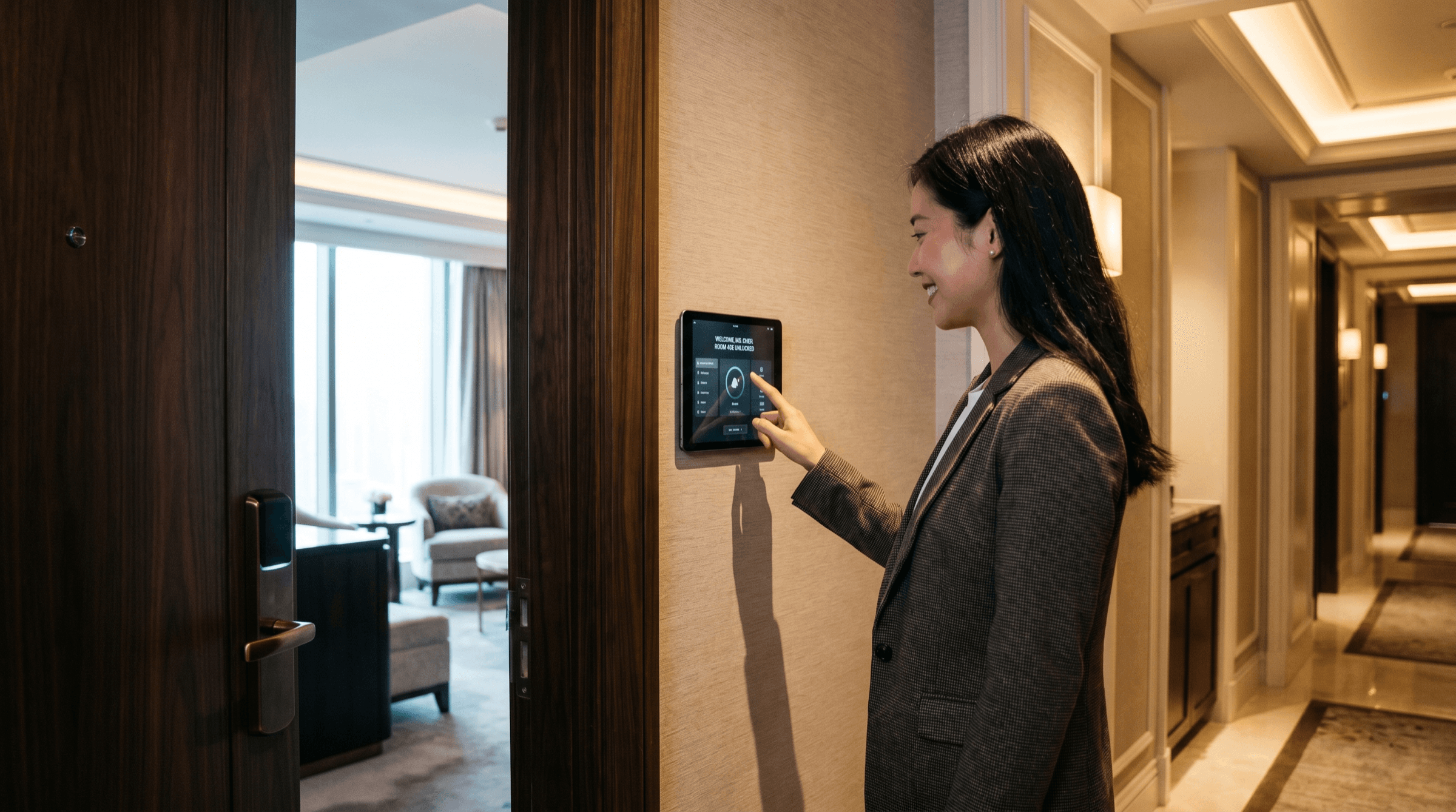
In practice, an ENTRIX deployment replaces the front-desk queue with a single signed verification that flows through the property. The face match, document parse, and liveness check happen at the front. The signed identity that results routes the housekeeping greeting, the in-room recognition, the F&B address, and the recovery escalation. One record. One trail. The examiner has one place to look.
Identity engineered this way is also defensible. Premium properties operate under increasingly specific regulatory scrutiny — guest registration, anti-money-laundering controls, regional ID requirements. ENTRIX is built to satisfy those by default, not as a compliance feature bolted onto a marketing-grade verification flow.
The pattern generalizes. Identity is the substrate in hospitality because identity is the seam every operational decision crosses. The same observation holds in healthcare admissions, in financial services onboarding, in any operation where who is in the room determines what the operation should do next.
The case for ENTRIX, in one sentence: AI identity verification is necessary, not differentiating. What differentiates is what happens after the verification — and ENTRIX is engineered for what happens after.


Press & analyst inquiries
Reach the Opsian press desk.
For interviews, briefings, and analyst access — get in touch and we will route the request.
Response within 24 hours · Sales@opsian.io