
[ Blog ]
In-room intelligence — what RoomOS actually decides
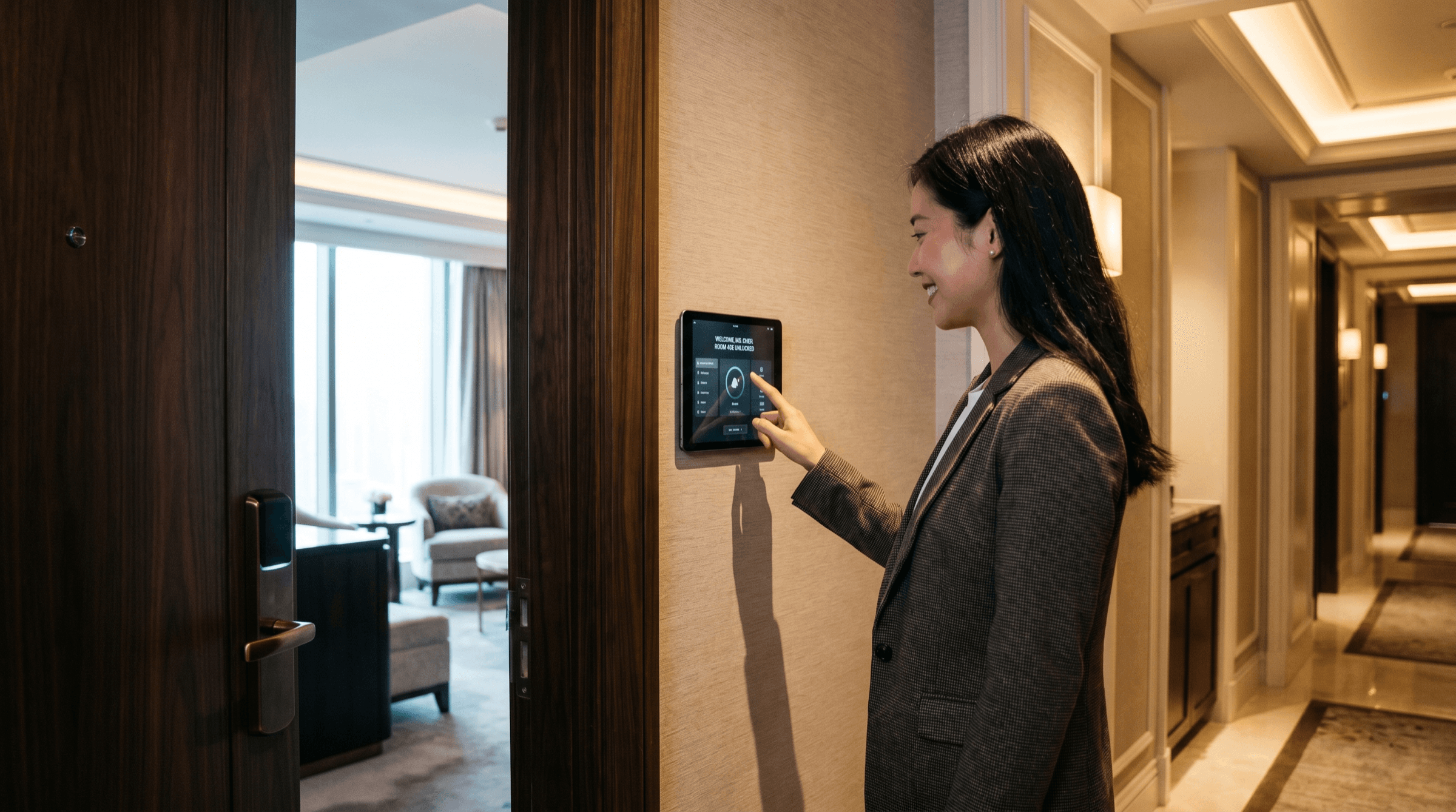
RoomOS is the in-room intelligence layer of the RoomQuest chain. It doesn't run the lights. It decides what the lights should do, and why.
There is a class of in-room technology that runs the lights, the temperature, and the curtains. There is a different class that decides what the lights, the temperature, and the curtains should do — given who the guest is, what the property knows about them, and what the operation is trying to achieve in that room at that hour. The first class is a control system. The second class is intelligence.
RoomOS is the second class. It is the in-room intelligence layer of the RoomQuest chain. It does not replace the room. It decides what the room should do, ties the decision to a signed audit trail, and stays inside boundaries the property has defined.
The work in production looks small until you watch the chain do it. RoomOS notices that a guest's arrival pattern at this property type runs cool — minus two degrees from the property default — and adjusts the room before the guest opens the door. It notices that a returning guest has a preferred light recipe stored from a stay at a sister property and applies it without anyone needing to log in. It notices that the dinner reservation the guest booked is one block away and adjusts the room's pre-departure cue accordingly.
None of those decisions are dramatic. None of them is the point. The point is that they happen because the intelligence layer can read across the data the property already has — booking, identity, prior stay, schedule — and apply it inside the room without anyone needing to remember.
RoomOS is engineered with the same discipline as every other Opsian product. The decisions are signed. The audit trail is readable. The property can override any decision and the override updates the recipe. The control surfaces remain the property's, because the property is who owns the guest relationship.
The product also takes seriously the case where the intelligence is wrong. Every recipe is reversible. Every override is logged with a reason that feeds back into the model. A property that disables a recipe for a class of guests should not have to disable it again next month — the chain learns from the override.
The output, where the engagement is mature, is not a flashier room. The output is a room that fits the guest. The guest does not notice. The property notices that complaint volume drops, recovery cost falls, and the guest is more likely to come back.
RoomOS sits where the engineering meets the operation. It is the part of the chain that decides, in the room, what the room should do — and it is the part that gives the property the receipts to defend the decision.


Press & analyst inquiries
Reach the Opsian press desk.
For interviews, briefings, and analyst access — get in touch and we will route the request.
Response within 24 hours · Sales@opsian.io